Policy Advisory
New European Bauhaus Self-Assessment Method
Gennaro Senatore served as Lead Expert for Emerging Technologies in the New European Bauhaus preparatory action, appointed by the European Commission’s Joint Research Centre (JRC). During the two-year appointment, he worked with experts across Europe to consolidate standards, codes of practice, and technical guidelines for assessing the built environment.
The resulting New European Bauhaus Self-Assessment Method, published in 2024, brings harmonized performance indicators for sustainability, functionality, aesthetics, emerging technologies, inclusiveness, governance, and economy into a common framework for project self-assessment.
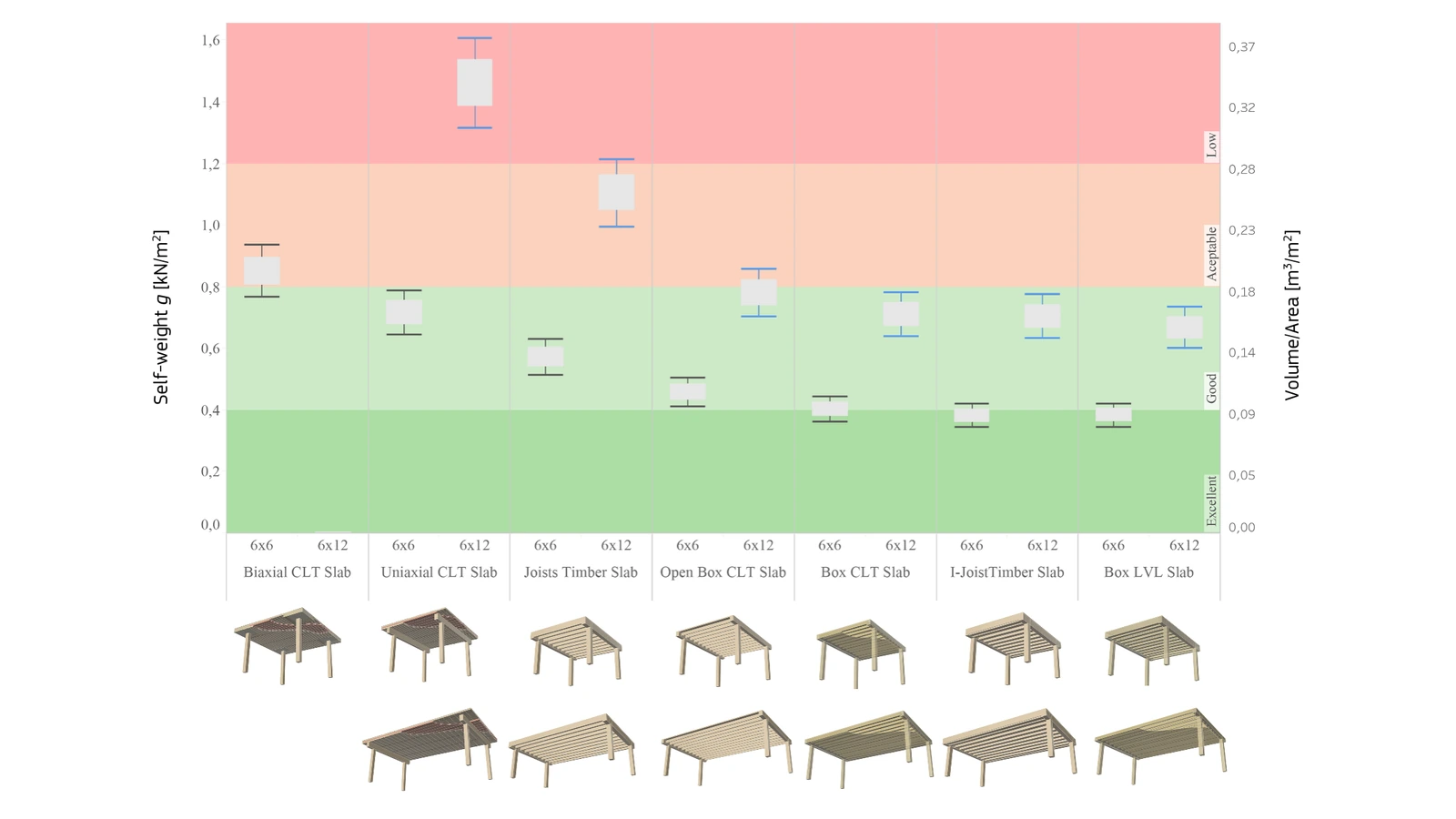
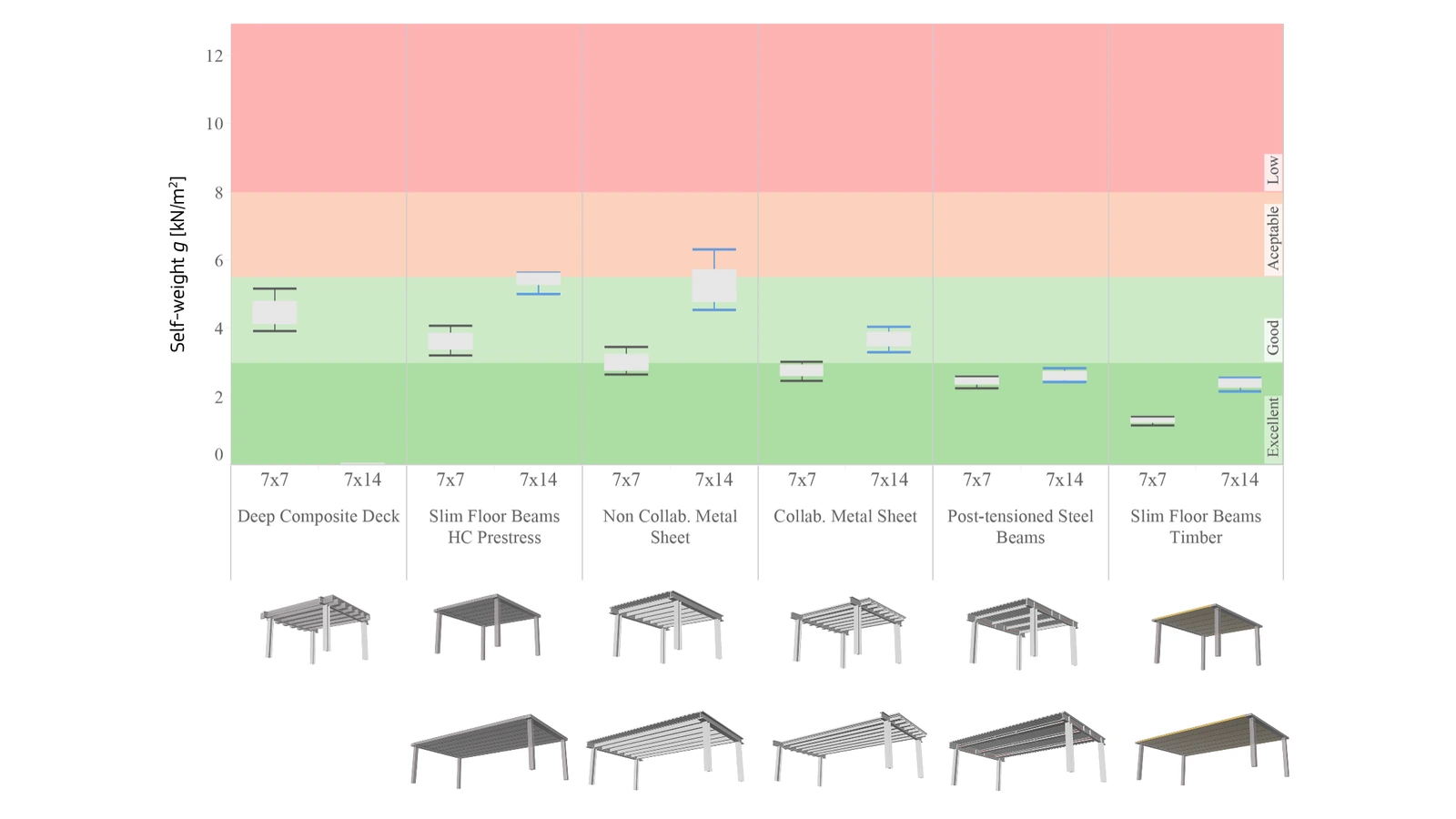
Indicator B.2.3 assesses material efficiency in floor structures using structural weight per unit floor area (kN/m²). The benchmark compares concrete, timber, and composite floor systems across different spans and structural configurations. These comparisons provide reference values for assessing how efficiently a proposed floor system uses material.
Floor Slab Benchmark
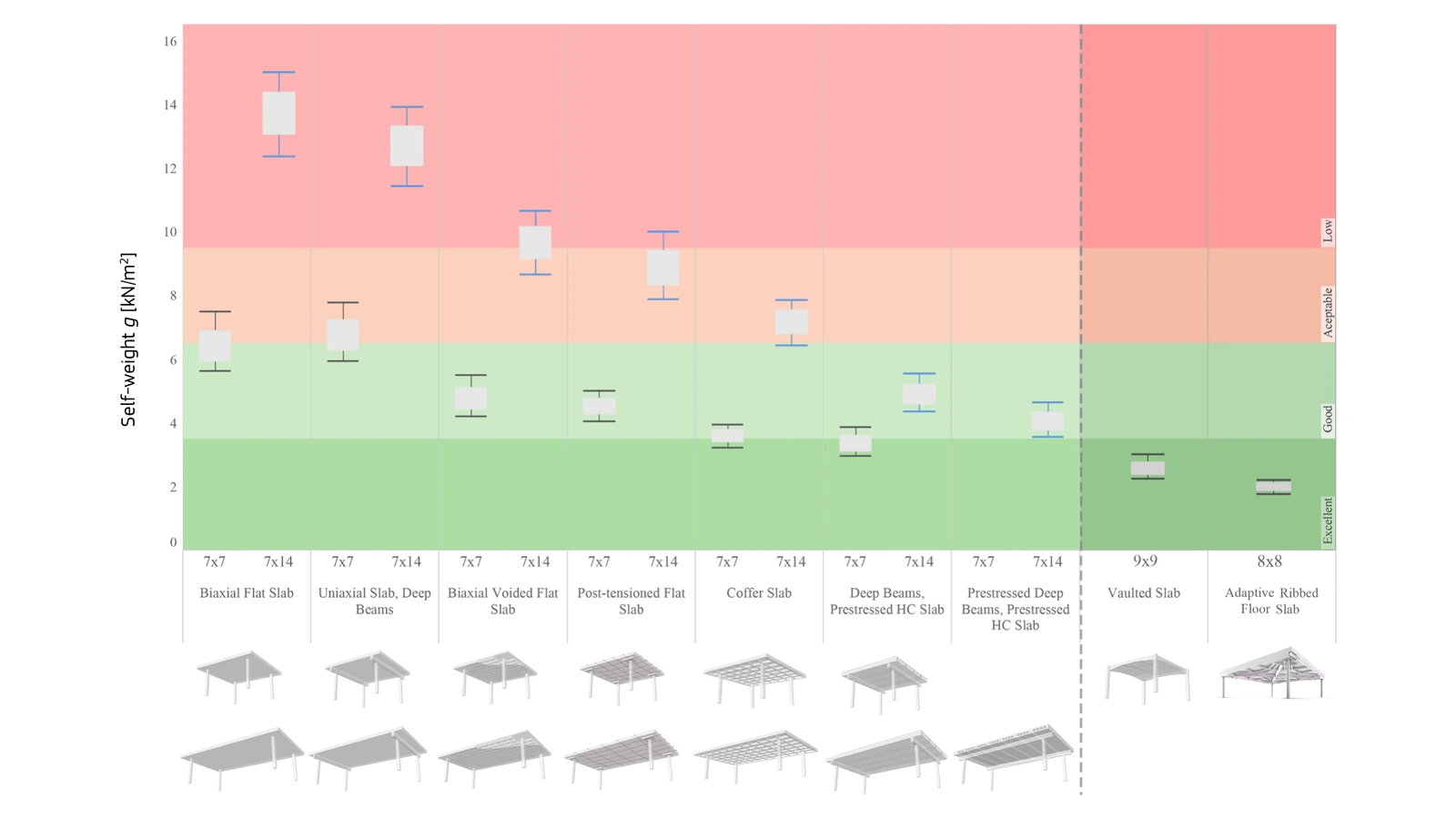
Concrete grades C25/30 and C50/60.
Handbook Figure 55, p. 188
C24 structural timber, GL24h and GL28h glulam, and laminated veneer lumber (LVL).
Handbook Figure 56, p. 189
Concrete C25/30 and C50/60, structural steel S235 and S355, and timber C24 and GL24h.
Handbook Figure 57, p. 190
Figure source: European Commission, Joint Research Centre; Lourenço, P. B., Maloutas, T., Santamouris, M., Widera, B., Ansaloni, F., Balaras, C., Katurić, I., Kolokotsa, D., Rossetto, T., Senatore, G., Tomaszewicz, A., Medeiros, E., Gkatzogias, K., Pohoryles, D., Romano, E. (2024). A practical guide to the New European Bauhaus self-assessment method and tool. E. Romano, co-editor. Publications Office of the European Union, Luxembourg. EUR 40041, JRC139118. doi:10.2760/9581060. Figures 55–57, pp. 188–190.
